
Is Gen Z really the problem?
Every generation seems to have a theory about the one that follows it.
They’re less committed. Less resilient. Harder to manage. Not interested in hard work.
Today, those assumptions are aimed at Gen Z.
But what if we’re asking the wrong questions?
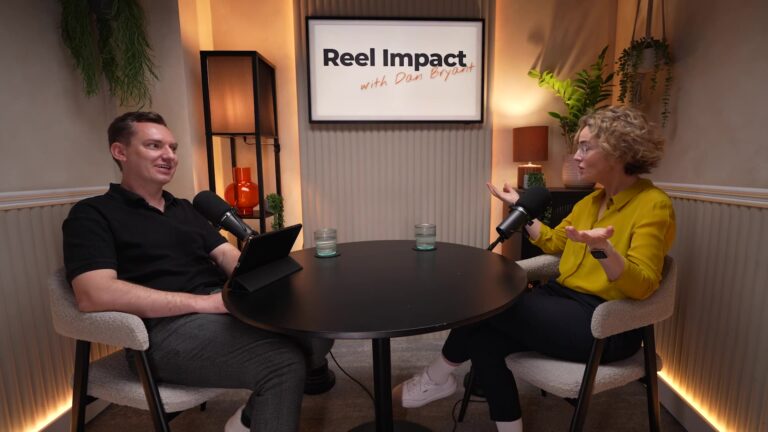
In the latest episode of Reel Impact, Dan Bryant sits down with generational researcher Josephine Hansom to explore the realities behind today’s workplace tensions and challenge some of the most common assumptions about younger employees.
The result is a fascinating conversation that goes beyond stereotypes to explore leadership, communication, workplace culture and the future of work itself.
More than labels
Terms like Baby Boomer, Gen X, Millennial and Gen Z have become part of everyday workplace language. But according to Josephine, generations are about far more than age.
What shapes a generation is the environment it grows up in.
Economic conditions, social change, technology, major world events and cultural shifts all influence how people see the world and what they expect from work.
Millennials, for example, entered adulthood during economic uncertainty and the aftermath of the financial crash. Gen Z came into the workforce during a global pandemic and are now building careers in a world being rapidly reshaped by artificial intelligence.
Understanding those contexts matters because they influence how people approach work, leadership and progression.
The broken career ladder
One of the most thought-provoking parts of the discussion centres on a simple idea: the traditional career ladder may no longer work.
For previous generations, the formula was relatively clear. Join an organisation, work hard, gain experience and gradually move up through the ranks.
Josephine argues that many Millennials were the first generation to discover that the rewards promised by that system didn’t always materialise.
Home ownership became less attainable. Career progression slowed. The connection between hard work and traditional life milestones became less certain.
Gen Z have grown up watching this happen.
Rather than blindly trusting the system, they are observing it.
They’re asking whether the traditional path is still worth following. And increasingly, the answer appears to be no.
Why only 6% want leadership roles
One statistic discussed during the episode stands out.
According to research referenced by Josephine, only 6% of Gen Z employees aspire to leadership positions.
For organisations concerned about succession planning, that’s a startling figure. But when viewed through a generational lens, it starts to make more sense.
Many younger employees have watched managers and leaders deal with increasing pressure, burnout and responsibility, often without seeing a proportionate reward.
At the same time, hybrid working has reduced opportunities to learn informally from experienced colleagues, making leadership pathways feel less visible and less achievable.
The question organisations need to ask is why leadership has become so unattractive.
Is hybrid working creating a culture gap?
The conversation also tackles one of the most debated workplace topics of recent years: hybrid working.
Josephine is clear that returning everyone to the office is not the answer.
The real issue isn’t where people work. It’s how organisations communicate and develop people within new working environments.
Many younger employees entered the workforce during or after the pandemic.
They missed opportunities to observe experienced colleagues, absorb workplace norms and develop confidence through day-to-day interactions.
Without those experiences, organisations can struggle to pass on knowledge, culture and expectations. The result is a workplace that can feel increasingly transactional. Tasks are assigned. Deadlines are met. Work gets completed. But learning, mentoring and connection often suffer.
The management challenge nobody wants to talk about
Perhaps the most powerful theme throughout the episode is Josephine’s challenge to the narrative that organisations have a “Gen Z problem”.
Instead, she suggests many organisations have a management problem. Leaders are often trying to manage people using approaches designed for a very different workplace.
Hybrid working, changing expectations and technological disruption have fundamentally altered how people experience work. Yet many management practices remain largely unchanged. Josephine argues that organisations need to become more intentional about communication, feedback and development.
What AI means for the future workforce
The discussion also explores how AI may reshape career pathways.
Historically, organisations have resembled a pyramid, with large numbers of junior employees developing skills before progressing into more specialised roles. As AI increasingly takes on routine tasks, Josephine suggests organisations may begin to resemble a diamond shape instead.
Fewer entry-level opportunities could mean fewer people developing the skills and experience needed to become future managers and leaders.
AI can complete tasks but it can’t build the next generation of talent.
For organisations embracing new technologies, this raises an important question: how do you continue developing future leaders if traditional entry routes begin to disappear?
Practical steps leaders can take today
While the challenges discussed in the episode are significant, Josephine also offers practical solutions.
One of her recommendations is creating a simple “Book of Me” for team members.
The concept encourages people to share:
- How they like to work
- How they prefer to communicate
- What motivates them
- What they want to achieve
The exercise helps managers move beyond assumptions and build stronger relationships based on understanding rather than stereotypes.
It also reinforces a key message from the episode: effective leadership starts with curiosity.
Listen to the full episode
The generational divide is often framed as a conflict between older and younger workers. This conversation suggests something different. The real challenge may not be generational at all.
It may be about how organisations adapt to changing expectations, changing technologies and a changing world of work. If you lead people, shape workplace culture or simply want to better understand the future of work, this episode offers plenty to think about.
Listen to The Generational Divide with Josephine Hansom on Reel Impact with Dan Bryant.
Want to work with us?
Find out how you can inspire your people through video by getting in touch today.
