
Why authentic storytelling still matters
When organisations talk about storytelling, it can sometimes feel like another corporate buzzword.
A polished campaign. A scripted leadership video. A handful of statistics wrapped in emotional language.
But great storytelling isn’t about sounding impressive. It is about helping people connect, understand and care.
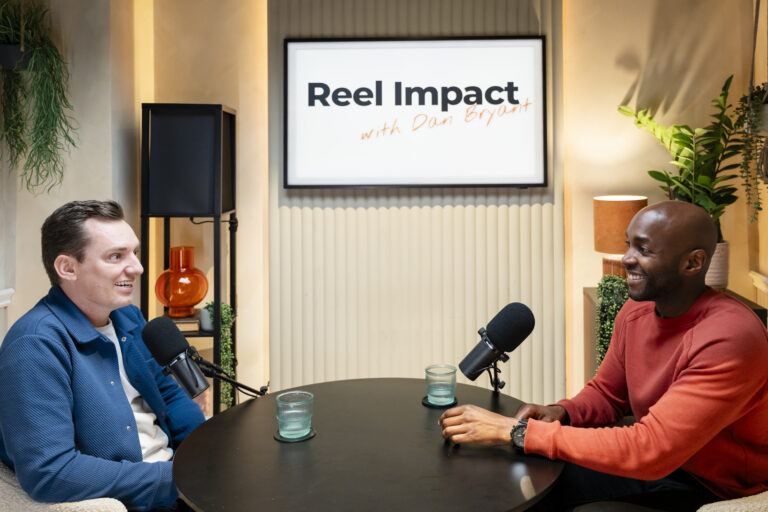
In the latest episode of Reel Impact, Dan Bryant sits down with Richard Etienne to explore why storytelling still matters in modern communication and why many organisations are still getting it wrong.
Richard’s perspective is particularly unique. As the former videographer for former UK Prime Minister Theresa May during the Brexit years, his role was not simply to create content. It was to make political communication feel more human and relatable.
That challenge mirrors what many communications professionals face every day inside organisations.
Storytelling is more than content creation
One of the most powerful ideas discussed in the episode is the difference between simply creating content and telling a story with purpose.
Richard describes storytelling as a “washing line”, a central narrative thread that everything else clips onto. Without that thread, communication becomes disconnected and forgettable.
Too often, organisations focus on pushing information out rather than helping people understand why it matters.
The most effective storytelling answers one critical question:
So what?
Why should employees care about this update?
Why should customers pay attention?
What behaviour, feeling or action are we trying to influence?
As Richard explains, strategic storytelling is about creating connection that leads to change, not simply broadcasting information.
Authenticity matters more than polish
One of the strongest themes throughout the conversation is authenticity.
Dan and Richard discuss how audiences increasingly connect with content that feels real rather than overly polished. In a world dominated by short attention spans, social media and endless streams of content, audiences quickly disengage from communication that feels staged or performative.
Richard argues that organisations can learn a lot from user-generated content and behind-the-scenes storytelling.
Instead of simply telling employees about a benefit or initiative, show a real person experiencing it. Let employees hear authentic voices from within the organisation rather than carefully scripted corporate language.
That authenticity creates trust and trust is what makes communication land.
Why corporate storytelling often falls flat
The episode also explores why internal communication can sometimes feel hollow.
Many organisations rely heavily on statistics, updates and announcements but fail to involve the people behind the stories.
Richard highlights the importance of showing progress over time, explaining how communication has influenced real change rather than repeating the same annual campaigns and awareness moments without reflection or evidence.
Measurement plays an important role here too.
While marketing teams often obsess over campaign performance, internal communication is not always measured with the same rigour. Richard and Dan discuss how organisations can become reluctant to share uncomfortable truths or poor engagement figures, even though those insights are often the key to improving communication.
Communication should help people feel seen
Alongside storytelling, the conversation also explores personality, introversion and workplace communication.
Through his work with The Introvert Space, Richard helps organisations create more personality-inclusive environments where communication works for different types of people, not just the loudest voices in the room.
One particularly powerful line from the episode is:
“Good communication helps the audience feel seen.”
That idea sits at the heart of effective storytelling.
Not everyone consumes communication in the same way. Some people engage through video, others through written summaries, conversations or Q&A sessions. Great communicators recognise this and create multiple ways for people to connect with a message.
Towards the end of the episode, Richard shares three practical tips for communicators who want to become better storytellers.
Listen to the full episode
This episode of Reel Impact goes beyond content creation and explores the deeper role storytelling plays in leadership, culture and communication.
From working inside Number 10 to helping organisations create more inclusive communication today, Richard shares practical insights that will resonate with communications professionals, leaders and anyone trying to connect with people more effectively.
Whether you work in internal communication, marketing, leadership or content creation, this conversation offers a thoughtful reminder that the best communication is not about being louder, it is about being more human.
Listen to the full episode of Reel Impact: The Power of Storytelling with Richard Etienne.
